A home near Lake Eufaula comes with a view most people only get on vacation. It also sits beside the largest-capacity lake in Oklahoma, a body of water built to rise and fall on purpose.
Understanding how and why the lake moves is the difference between a wet spring and a flooded lower floor. This guide covers what shoreline owners in McIntosh County should know about their water risk.
A lake designed to hold floodwater
Lake Eufaula is a reservoir on the Canadian River, operated by the U.S. Army Corps of Engineers for flood control, power, water supply, and recreation. It holds more water than any other lake in the state, with roughly 102,000 surface acres and about 600 miles of shoreline.
That flood-control job is the key detail. The lake is meant to catch runoff from a huge upstream area and store it temporarily, which means the water line is not fixed.
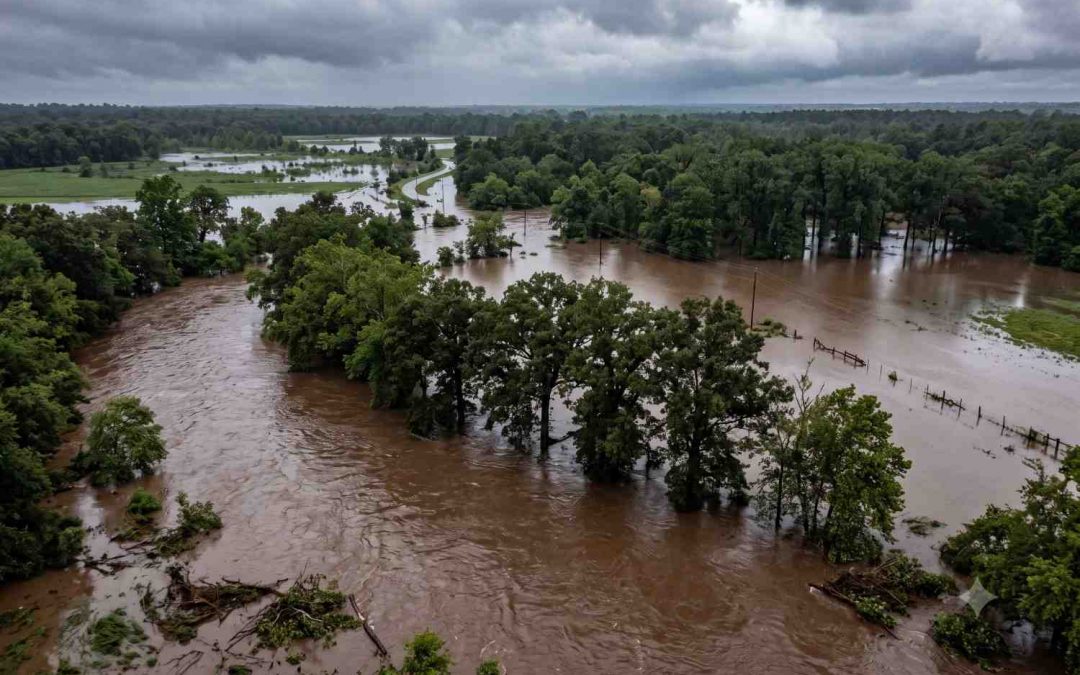
When the basin takes on heavy rain, the Corps lets the lake climb into its flood pool before releasing water downstream. Shoreline property sits inside the range where that rise plays out.
Why the water can climb fast
The Canadian River basin above the dam drains more than 47,000 square miles. Rain that falls hundreds of miles west can reach the lake days later, long after the local sky has cleared.
That is why a calm week in Eufaula does not mean the risk has passed. The lake can keep rising on water that fell upstream, and the level answers to the whole basin, not just the local forecast.
Local creeks add their own risk on top of the lake. As nearby towns have seen, a slow storm parked over the wrong watershed can flood low-lying property before the lake ever crests.
The spring of 2015 is the recent benchmark. Heavy rains raised the lake well above its normal level and forced the largest controlled releases in decades.
What this means for a shoreline home
The homes most exposed are the ones closest to the normal water line and lowest in elevation. As the lake fills its flood pool, that band of property is first to see water in crawlspaces, under slabs, and against foundations.
Even water that never reaches living space causes damage. A saturated crawlspace or a foundation sitting in standing water invites wood rot, and it starts the same mold clock any indoor leak would.
Dock and boathouse structures take a beating too, but the quiet damage to the house itself is the costlier surprise. It often shows up weeks later as musty air, cupped flooring, or staining low on the walls.
How lake-area owners can stay ahead of it
Track the lake, not just the weather. The Corps of Engineers publishes daily lake levels and flood-control status for Eufaula, which tells you what the reservoir is doing before it reaches your yard.
Keep the ground working for you. Make sure soil slopes away from the foundation, keep gutters and downspouts clear, and know where water pools on the property during ordinary storms.
If water does reach the structure, speed decides the outcome. The EPA advises drying wet materials within 24 to 48 hours to prevent mold, so the first day matters more than any other.
The bottom line for McIntosh County
Living on Lake Eufaula means living with a water line that moves by design. The risk is manageable, but only if you respect that the lake answers to a basin far larger than the local forecast.
Watch the levels, keep water moving away from the house, and treat any intrusion as urgent. For a sense of how water risk shifts from one southeastern Oklahoma town to the next, the surrounding county pattern is worth knowing.
Get Help Now
When high water or a storm reaches a home around Lake Eufaula, Eufaula, Checotah, or anywhere across McIntosh County, FloodSERV provides 24/7, IICRC-certified water damage cleanup and structural drying. Call 918-429-1911 or reach the team through the contact page.