
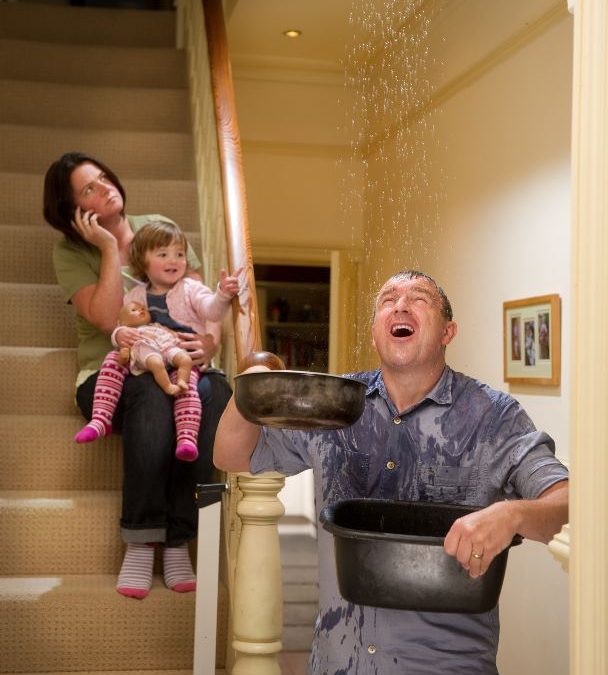
When water floods a room, the instinct is understandable: grab the towels, run a box fan, and handle it yourself. For a small, clean spill caught instantly, that can be enough.
But for anything more, do-it-yourself cleanup often creates a bigger problem than the one it solves. The water you can see is rarely the water that causes lasting damage.
This article explains why DIY cleanup backfires, the hidden risks it leaves behind, and what that mistake really costs.
The Water You Can See Is Not the Problem
A wet floor that looks dry after a day of fans can feel like a win. It rarely is. Water migrates.
It wicks up into drywall, soaks into subfloor and insulation, and pools in the hidden cavities behind baseboards and under cabinets where no household fan can reach.
Surface drying treats the symptom and ignores the cause. This is the single biggest reason DIY cleanup fails: it is impossible to confirm a structure is dry by looking at it.
- Drywall wicks moisture upward, staying wet inside long after the surface dries
- Subfloors trap water beneath finished flooring where air never reaches it
- Insulation holds water against framing, feeding rot and mold for weeks
The 48-Hour Mold Clock
Hidden moisture does not stay harmless for long. Mold needs only moisture, time, and an organic surface, and a wet home offers all three.
Federal guidance is specific about the window. The EPA advises drying wet or damp materials within 24 to 48 hours, because in most cases mold will not grow if that deadline is met.
Miss it, and the calculation reverses. Once mold colonizes inside a wall cavity or under a floor, surface cleaning will not remove it.
This matters for health as much as property. The CDC reports that damp, moldy environments can cause a stuffy nose, sore throat, coughing, wheezing, burning eyes, or skin rash.
People with asthma or a mold allergy may have severe reactions. Those who are immune-compromised or living with chronic lung disease may develop lung infections.
The Hidden Dangers of Doing It Yourself
Beyond mold, DIY cleanup carries risks most homeowners never see coming until it is too late.
Electrical and Contamination Hazards
Standing water near outlets or appliances is an electrocution risk, not an inconvenience. And not all water is equal.
The IICRC S500 standard classifies water damage into three categories. Category 3, commonly called black water, is grossly contaminated and can contain pathogenic, toxigenic, or other harmful agents.
Sewage backups, toilet overflows, and rising floodwater fall here. Mopping a sewage backup with household towels spreads contamination through the home rather than containing it.
The Wrong Equipment for the Job
Household fans and a shop vacuum move air and surface water. They do not pull moisture out of structural materials.
- Truck-mounted extractors that remove standing water at volumes household equipment cannot match
- Commercial dehumidifiers that pull moisture from deep inside framing and subfloor
- Moisture meters and thermal cameras that find hidden water a homeowner cannot see
What It Actually Costs You
The real price of DIY cleanup shows up weeks or months later, and it lands in three places.
Mold remediation. Removing mold from inside walls, floors, and HVAC systems is a demolition-and-rebuild job, not a cleaning job. It is the outcome professional drying exists to prevent.
Structural repair. Trapped moisture rots framing, buckles flooring, and crumbles drywall, turning a dry-out into a full rebuild.
A complicated insurance claim. This is the cost that surprises homeowners most.
Adjusters look for evidence that damage was sudden and that the homeowner acted to limit it. Coverage language varies between carriers, so read your own policy.
Some policies exclude damage from continuous or repeated seepage over weeks or longer, though many of those exclusions carve out damage hidden inside walls, ceilings, or beneath floors.
What is close to universal is the duty to take reasonable steps to prevent further damage. A DIY job that lets moisture sit gives an insurer room to argue the mold resulted from inaction.
Professional moisture readings, drying logs, and dated documentation are the record that answers that argument. Understanding how to document a loss and work with your adjuster is often the difference between a paid claim and an out-of-pocket disaster.
When to Call a Professional
Some situations are never DIY jobs. Call a certified restoration team right away if any of these apply.
- More than a small, clean spill, or water that has sat for hours
- Any contaminated water from a sewage backup, toilet overflow, or flooding
- Water near electrical outlets, appliances, or the breaker panel
- Water that reached drywall, insulation, or subfloor, not just hard surfaces
- Any sign of mold, musty odor, or staining that returns after cleaning
Certified technicians follow industry drying standards, verify dryness with meters rather than guesswork, and hand you the records your insurer needs.
If mold has already taken hold, professional mold removal addresses the colonies that surface cleaning leaves behind. Full flood and water damage cleanup restores the structure to a genuinely dry, safe condition.
The Bottom Line
DIY water cleanup feels cheaper in the moment, but it gambles with the part of the damage you cannot see.
Hidden moisture can start growing mold within two days, rots structure for months, and can complicate a claim that would otherwise have paid for the whole job.
For anything beyond a minor, clean spill, fast professional extraction and verified drying is not the expensive option. It is the one that keeps the total cost down.
If your home has taken on water, FloodSERV provides 24/7 emergency water damage restoration across Oklahoma with IICRC-certified technicians, industrial drying equipment, and full insurance documentation.
Call 918-429-1911 now, or visit floodserv.com to get professional water damage restoration before hidden moisture turns into a much bigger bill.
