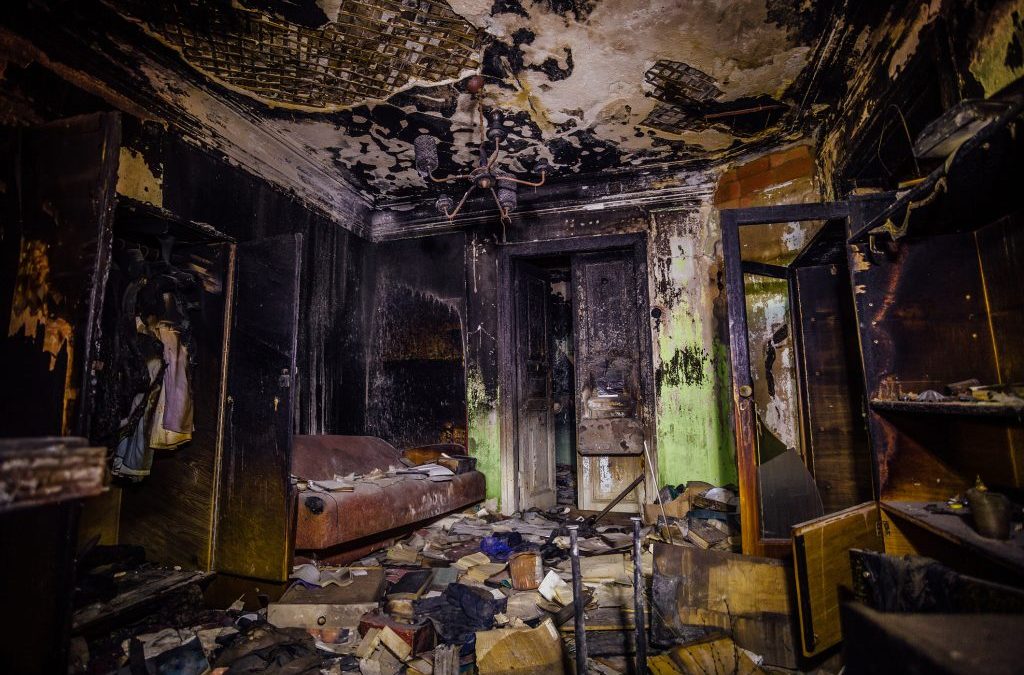
The fire is out. The trucks have gone. You are standing in the yard looking at a house that is still yours but no longer feels like it.
What happens over the next three days will shape both the cost of the repair and how much of your property is actually recoverable. Most of the damage people end up paying for did not happen during the fire. It happened afterward.
This guide walks through the first 72 hours after a house fire, what to do in each window, and the mistakes that quietly cost homeowners the most.
Hour Zero to Six: Do Not Go Back Inside
The strongest instinct after a fire is to go in and start saving things. It is also the most dangerous one.
A structure that looks intact can hide compromised framing, damaged wiring, and gas that has not fully cleared. Fire crews frequently cut holes in walls and roofs to reach hidden flame, and those openings change how the building carries load.
Wait until the fire department clears the property for entry. That clearance is not a formality, and no possession inside is worth the risk of entering before it comes.
Soot and Water Are Both Hazards
Firefighting water and soot residue left behind can both make you ill. Guidance from public health agencies is consistent that you should not eat, drink, or breathe anything that has been in contact with flame, smoke, soot, or the water used to extinguish the fire.
Discard food, drinks, and medication exposed to heat or smoke, including sealed items in cabinets near the fire. Heat degrades contents through packaging.
Hour Six to Twenty-Four: Secure, Notify, Document
Once the property is cleared, three things need to happen in parallel, and none of them involve cleaning.
Secure the Structure
Broken windows, cut roof sections, and a front door that no longer locks leave the building open to weather and to theft. Most policies require the owner to take reasonable steps to prevent further damage.
Board-up and roof tarping are usually the first billable work done on a fire loss, and they happen before any restoration begins.
Notify Your Insurer Immediately
Open the claim the same day if you can. The insurer will assign an adjuster, and that timeline drives everything downstream.
The U.S. Fire Administration publishes a free booklet, After the Fire: Returning to Normal, covering the first 24 hours, insurance considerations, valuing property, and replacing documents. It is worth reading before you speak to anyone.
Document Everything Before It Moves
Photograph and video every room from multiple angles, including areas that appear untouched. Smoke travels far beyond the burn area, and damage you cannot see today will need proving later.
Build a written inventory of damaged contents as you go. Reconstructing it from memory weeks later is how people lose money on a claim.
Day Two to Three: Why Soot Gets Worse, Not Better
This is the window most homeowners misunderstand. Fire damage is not static after the flames are out. It is actively progressing.
Soot is acidic. As it sits on surfaces, it etches and stains materials in a predictable order, and the longer it sits, the more of that damage becomes permanent rather than cleanable.
Metals corrode. Grout and porous stone absorb residue. Plastics and vinyl yellow. Painted walls move from washable to requiring seal and repaint.
Smoke Goes Where Fire Did Not
Smoke particles are small enough to travel through the entire structure, settling inside cabinets, wall cavities, insulation, and the HVAC system.
This is why a fire in one room produces an odor problem in every room. The particles carrying that smell are physically present in materials far from the burn, which is why removing embedded smoke odor takes more than surface cleaning and air fresheners.
Running the HVAC before the system has been assessed distributes those particles further. Leave it off.
The Water Damage Nobody Planned For
A structure fire is almost always a water loss as well. The volume used to extinguish even a contained fire saturates flooring, drywall, and insulation.
That water starts its own clock. Wet materials left undried begin supporting mold growth within days, which turns a fire claim into a fire and mold claim. Understanding how water damage compounds a fire loss explains why extraction usually starts before soot cleaning does.
What Not to Touch
The urge to start cleaning is strong and almost always counterproductive.
- Do not wipe soot off walls, wiping drives residue deeper into paint and drywall
- Do not use a household vacuum on soot, it pushes fine particles back into the air
- Do not run electrical appliances that were exposed to heat, smoke, or water
- Do not use ceiling fixtures if the ceiling above them is wet
- Do not wash smoke-damaged fabrics in a home machine, it can set the odor permanently
The American Red Cross publishes practical guidance on checking your home and cleaning up after a fire that covers what is reasonable for a homeowner to handle and what is not.
What McAlester Homeowners Should Expect Next
Restoration follows a defined sequence, and knowing it prevents the feeling that nothing is happening.
Emergency board-up and water extraction come first, then structural cleaning and soot removal, then deodorization, then contents restoration, then reconstruction. Each stage gates the next.
Much of McAlester’s housing stock is older, which affects that sequence. Plaster, original wood trim, and knob-and-tube era wiring all need handling that newer construction does not.
Reviewing the full fire damage restoration process from emergency response through rebuild helps set realistic expectations, and what the rebuild stage typically involves in time and cost is worth understanding before you approve a scope.
The Bottom Line
The 72 hours after a fire are not a waiting period. They are the window in which recoverable property either gets protected or quietly stops being recoverable.
Stay out until cleared, secure the building, open the claim, document everything, and leave the cleaning to people with the right equipment.
FloodSERV is IICRC certified and available 24/7 for fire damage restoration in McAlester, including emergency board-up, full fire and smoke damage restoration, and smoke damage cleanup, with documentation prepared for your insurance carrier. Call 918-429-1911 or reach the team here.