
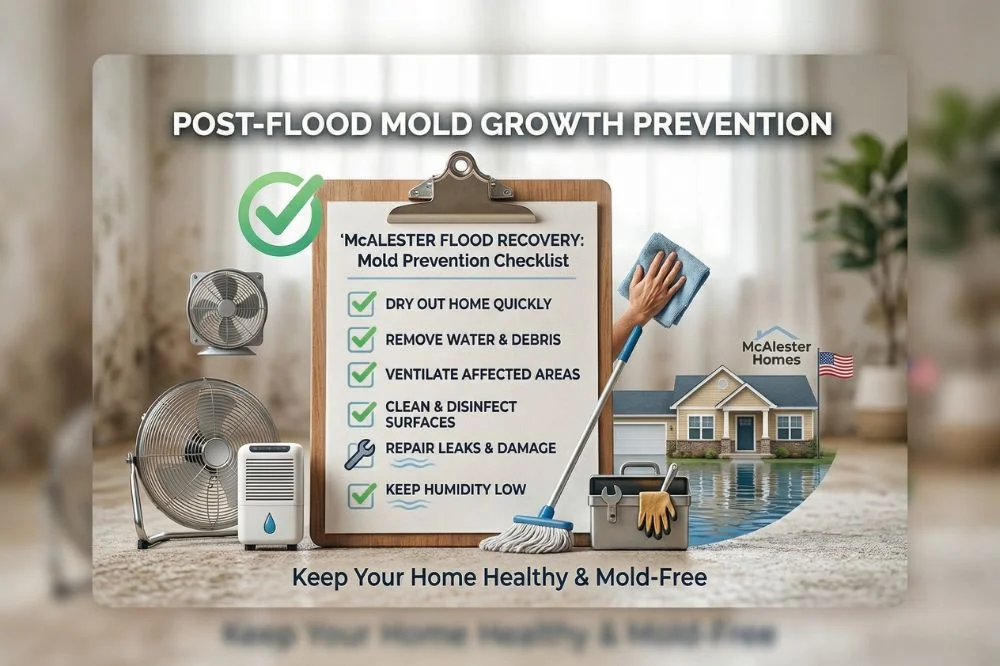
McAlester, Oklahoma, is no stranger to sudden spring storms and flash flooding. When the waters recede, the clock starts ticking. Mold can begin to colonize damp drywall and flooring in as little as 24 to 48 hours.
For homeowners in the Choctaw Nation area, immediate action isn’t just about saving your furniture—it’s about protecting your home’s air quality and structural integrity. Use this comprehensive checklist to prevent post-flood mold growth.
1. Safety and Documentation (The First 4 Hours)
Before you step into a flooded room, ensure the environment is safe.
- Turn off the Power: Never enter standing water if the electricity is still on. If the breaker box is in a flooded basement, call an electrician.
- Wear Personal Protective Equipment (PPE): Floodwater often contains sewage or chemicals. Wear rubber boots, gloves, and an N95 respirator to avoid inhaling early-stage spores.
- Take Photos for Insurance: Document the water levels on the walls and all damaged items before you move anything. This is vital for FEMA or private insurance claims.
2. Water Extraction and Humidity Control
Mold thrives in humidity levels above 60%. Your goal is to get that number below 50% as quickly as possible.
- Remove Standing Water: Use a wet/dry vacuum or a sump pump. Do not use a regular household vacuum.
- Create Airflow: If the humidity outside is lower than inside, open windows. If not, keep windows closed and run high-capacity dehumidifiers.
- Deploy High-Velocity Fans: Standard ceiling fans won’t cut it. Rent industrial air movers to force moisture out of floorboards and wall cavities.
3. The “Cull and Clean” Phase
Not everything can be saved. Being ruthless now prevents a massive mold outbreak later.
What to Discard (Porous Materials)
If these items have been submerged for more than 24 hours, they usually cannot be fully decontaminated:
- Drywall and Insulation: Cut out drywall at least 12 inches above the highest water line. Remove all wet fiberglass or cellulose insulation.
- Carpeting and Padding: These act as sponges for bacteria and mold. It is almost always safer to replace them.
- Particle Board Furniture: This material swells and traps moisture internally, making it a primary mold food source.
What to Clean (Non-Porous Materials)
- Hardwood and Tile: Clean with a non-phosphate detergent and dry immediately.
- Metal and Glass: These can be disinfected with a solution of 1 cup of bleach to 1 gallon of water (only on non-porous surfaces).
4. Disinfecting and Antimicrobial Treatment
Once the muck is removed, you must kill any lingering spores.
- Wash Surfaces: Scrub all remaining hard surfaces (studs, concrete floors) with soapy water.
- Apply Antimicrobials: Use a professional-grade antimicrobial spray (available at local McAlester hardware stores) on exposed wall studs to prevent “hidden” mold growth behind future drywall.
- Avoid Paint or Sealer: Never paint over a damp surface. This traps moisture inside the wood, leading to dry rot and structural failure.
5. Professional Inspection vs. DIY
How do you know if your home is truly dry?
- The Moisture Meter Test: Professional restorers use moisture meters to check the internal dampness of wood studs. Even if a wall feels dry to the touch, the core may still be wet enough to grow mold.
- When to Call Pros: If the flooding involved “Black Water” (sewage) or if the water sat for more than 48 hours, contact a certified mold remediation specialist.
Quick Summary Checklist for McAlester Homeowners
| Task | Deadline |
| Cut Power & Take Photos | Hour 1-2 |
| Extract Standing Water | Hour 2-12 |
| Remove Wet Drywall/Carpet | Hour 12-24 |
| Set Up Dehumidifiers/Fans | Hour 24 |
| Scrub Studs with Disinfectant | Hour 24-48 |
| Test Moisture Levels | Before Rebuilding |
Final Thoughts
McAlester’s humidity can make flood recovery difficult. By following this checklist and acting within the first 48 hours, you can significantly reduce the risk of a toxic mold infestation.
Remember: If in doubt, cut it out. It is far cheaper to replace a foot of drywall now than to remediate a whole-home mold crisis later.