Oklahoma winters are unpredictable. A 70-degree afternoon can swing into a hard freeze within a day, and that sudden drop is exactly what catches plumbing off guard.
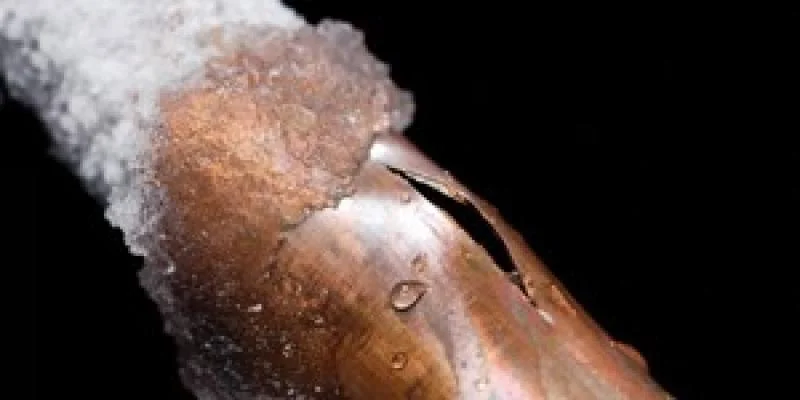
When water inside a pipe freezes, it expands with enough force to split copper, PVC, or galvanized steel. The result is rarely a slow drip. It is often a sudden rupture that floods a home in minutes.
This guide explains why pipes burst in freezing weather, how to prevent it before the cold arrives, and what to do in the first critical minutes if a pipe lets go.
Why Pipes Burst When Temperatures Drop
It is a common myth that a pipe bursts at the exact spot where the ice forms. In reality, the failure usually happens somewhere between the frozen blockage and a closed faucet.
Research by the Building Research Council at the University of Illinois found that once ice fully blocks a pipe, continued freezing drives water pressure up downstream of the blockage, and the pipe fails at the weakest point in that section, often where no ice has formed at all. Upstream of the blockage, water can retreat toward its source, so no dangerous pressure builds there.
The damage adds up fast. Even a small rupture moves a large volume of water, and it does so continuously until someone finds it. That is enough to soak drywall, warp flooring, and seep into a foundation before anyone notices.
Certain pipes are far more vulnerable than others. The highest-risk lines run through unheated or poorly insulated spaces where cold air collects.
- Crawlspaces and unheated basements where cold air pools against exposed pipe
- Attics and exterior walls with little or no insulation around the plumbing
- Garages that hold water supply lines near an often-open door
- Outdoor spigots and hose bibs, especially with a garden hose still attached
How to Prevent Frozen and Burst Pipes
Prevention is cheap compared to a flooded living room. Most of these steps cost very little and take only a few minutes, and they make the difference between a working plumbing system and an emergency.
Insulate the Pipes That Matter Most
Foam pipe insulation sleeves act like a winter coat for exposed plumbing, and they are inexpensive and widely available at any home center. Wrap any pipe in a crawlspace, attic, garage, or exterior wall.
The U.S. Department of Energy notes that insulating water pipes also cuts heat loss from hot water lines, which saves energy year-round. For especially cold spots, UL-listed heat tape adds an active heat source.
Let Faucets Drip During a Hard Freeze
When temperatures fall below freezing, let a faucet served by exposed pipes drip slowly.
The reason is not what most people assume. A trickle does slow freezing, but water can still freeze in a slowly moving line. What the open faucet really does is relieve the pressure that builds between the faucet and the ice blockage.
Without that pressure, the pipe does not burst, even if the water inside it freezes. Only pipes running through unheated or unprotected spaces need to be left dripping, and even a very slight drip provides the pressure relief.
Open Cabinets and Keep the Heat Steady
Kitchen and bathroom plumbing is often boxed inside cabinets that block warm room air. Opening those cabinet doors lets heat circulate the pipes. Keep the thermostat set to the same temperature day and night, and per American Red Cross guidance, never let the home drop below 55 degrees, even when away.
Disconnect Hoses Before the First Freeze
A garden hose left attached to an outdoor spigot is one of the most common and preventable causes of a burst pipe. The hose traps water in the line, which freezes and pushes back into the pipe inside the wall. Disconnect, drain, and store all hoses in late fall, then add an insulated faucet cover.
Close the Garage and Drain Outdoor Lines
If supply lines run through a garage wall or ceiling, keep the big door shut on cold days. A bathroom above or beside the garage is a common trouble spot.
Sprinkler and pool supply lines need draining before the first freeze too. Shut the indoor valve that feeds outdoor spigots, then open the spigot outside so the line empties.
Why This Matters So Much in Oklahoma
Oklahoma plumbing is uniquely exposed to freeze damage, and not because the state is the coldest.
The danger comes from the swings. Mild stretches lull homeowners into a false sense of security, then an Arctic front drops temperatures dozens of degrees in a matter of hours.
The National Weather Service in Norman documents a March 1989 front that pulled Oklahoma City from 74 degrees into the 30s in under an hour, and then down to 20 degrees by evening.
- Sudden cold snaps arrive faster than many homeowners can prepare for
- Homes in warmer states often lack the built-in freeze protection standard farther north, with pipes running through uninsulated attics, crawl spaces, and exterior walls
- Building Research Council testing puts the temperature alert threshold for southern states at 20 degrees, the point where uninsulated pipes reliably begin to freeze
- Statewide ice events can knock out power, leaving homes without heat exactly when pipes need it most
Because these freezes are short but severe, the homes that fare best are the ones prepared before the forecast turns, not after.
How to Tell if a Pipe Is Already Frozen
The clearest sign is a faucet that gives only a trickle, or nothing at all, on a cold morning. Frost on an exposed pipe is another warning.
Peeling paint, a sagging ceiling or damp drywall near plumbing can mean the pipe has already split. Check every faucet, since one frozen line usually means others are close.
What to Do When a Pipe Bursts
If a pipe has already failed, the first few minutes shape how much damage the home takes. Move quickly and in this order.
- Shut off the main water supply. Find your main shutoff valve and close it immediately to stop the flow.
- Cut the power if water is near outlets. Water and live electricity are a deadly mix. Switch off the breaker to affected rooms, and stay clear if you cannot reach it safely.
- Open faucets to relieve pressure. Draining the remaining water reduces pressure on the rest of the system.
- Document everything. Photograph and video the damage before you move or remove anything, since your insurance claim depends on this evidence.
- Call for professional help. Hidden water inside walls and under floors needs professional extraction and drying to prevent mold.
Thawing a frozen pipe before it bursts is also possible, but never use an open flame. A blowtorch, kerosene or propane heater, or charcoal stove can damage the pipe and start a fire.
Use an electric heating pad, a hair dryer, or a space heater kept clear of anything flammable, and keep the faucet open while you work.
After any significant water release, the cleanup is more than surface deep. Water wicks into drywall, subfloor, and insulation, and an IICRC-certified water removal company can dry the structure fully and head off future mold problems. Knowing the right steps to take in the first moments of water damage can keep a burst pipe from becoming a structural loss.
The Bottom Line
Burst pipes are one of the most preventable winter disasters.
A little insulation, a dripping faucet, an open cabinet, and a disconnected hose protect against thousands in repairs.
But when a pipe does fail, speed is everything: shut off the water, protect yourself from electrical hazards, document the damage, and get professional drying underway before mold takes hold. For homes that have already flooded, fast and thorough water extraction is what separates a minor cleanup from a major rebuild.
If a burst pipe has flooded your Oklahoma home, FloodSERV provides 24/7 emergency water damage restoration with IICRC-certified technicians and truck-mounted extraction. Call 918-429-1911 any hour of the day, or visit floodserv.com to request fast emergency water removal before the damage spreads.