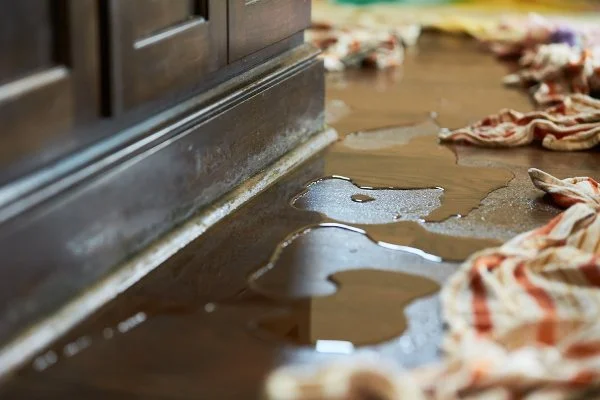
A toilet that overflows with dirty water, or a floor drain that starts pushing waste back up, feels like a mess you can handle with a mop and a strong cleaner.
It is not. Sewage water belongs to its own hazard class, and the reason has nothing to do with how it looks or smells. This guide explains what that classification means, why the water is dangerous, and why almost everything it touches has to leave the house.
What “Category 3” actually means
The restoration industry sorts water damage by contamination level, using the ANSI/IICRC S500 standard. Category 1 is clean water from a supply line, and Category 2 is “gray water” with some contamination.
Category 3, called “black water,” is grossly contaminated and can carry pathogens and toxins that make people seriously ill. Sewage backups, toilet overflows containing waste, and water rising in from outside all fall into this category by definition.
One detail catches homeowners off guard: cleaner water degrades. Category 1 water that sits warm and untreated can slide to Category 2 and then Category 3 within a few days, so delays can change the whole job.
Why the water is a biohazard, not a mess
Raw sewage is a live mix of organisms. The EPA notes that sanitary sewer overflows can carry bacteria, viruses, protozoa, intestinal worms, and molds and fungi, causing illness that ranges from mild gastroenteritis to serious disease.
Exposure routes are ordinary and easy to miss. Contaminated hands touching the face, a splash near an open cut, or breathing air in a closed, poorly ventilated room can all lead to illness.
Children are at higher risk because they touch surfaces and put their hands to their mouths more readily. That is a big part of why the “just wipe it up” instinct is the wrong one here.
Why most of it has to be thrown away
Porous materials soak up contamination and cannot be reliably disinfected once black water gets into them. Under the S500 standard, items like drywall, carpet, padding, and insulation that contacted Category 3 water are removed, not cleaned.
That feels wasteful, but it is the safer math. A surface can be wiped, but the inside of a wet, porous material stays a reservoir for bacteria and odor no matter how hard the top is scrubbed.
The other clock running is mold. The EPA advises drying wet materials within 24 to 48 hours, because past that window mold usually begins to grow on damp surfaces.
Why this is dangerous to DIY
The urge to save money and belongings pushes people into standing water without protection, and that is where a contained problem spreads. Walking through it tracks pathogens across the house.
Running fans on contaminated water is another common misstep, since it can push contaminated aerosols and spores into rooms that were never affected. Before switching anything on, it is worth checking whether your HVAC system pulled contamination into the ductwork.
Restoration crews work the problem in an order that protects the home: protective gear, removal of ruined porous materials, disinfection of what remains, then structural drying and a check confirming the home is truly dry, not just dry to the touch.
The bottom line for homeowners
Treat any sewage intrusion as a biohazard from the first minute. Keep people and pets away from the water, shut off the source if you safely can, and avoid tracking through it.
Watch for the early warning signs of mold in the days after, and do not assume a clean-looking floor is a safe one. The cost of professional cleanup is small next to the cost of an illness or a house that never fully dried.
Get Help Now
If a sewage backup or contaminated flood has reached your home in McAlester or the surrounding southeastern Oklahoma counties, FloodSERV provides 24/7, IICRC-certified black water cleanup, disinfection, and structural drying. Call 918-429-1911 or reach the team through the contact page for emergency dispatch.